It’s time! Poor Man’s Fight VII: LIFE AFTER HELL is out now!
Read the Prologue and Chapter One below!
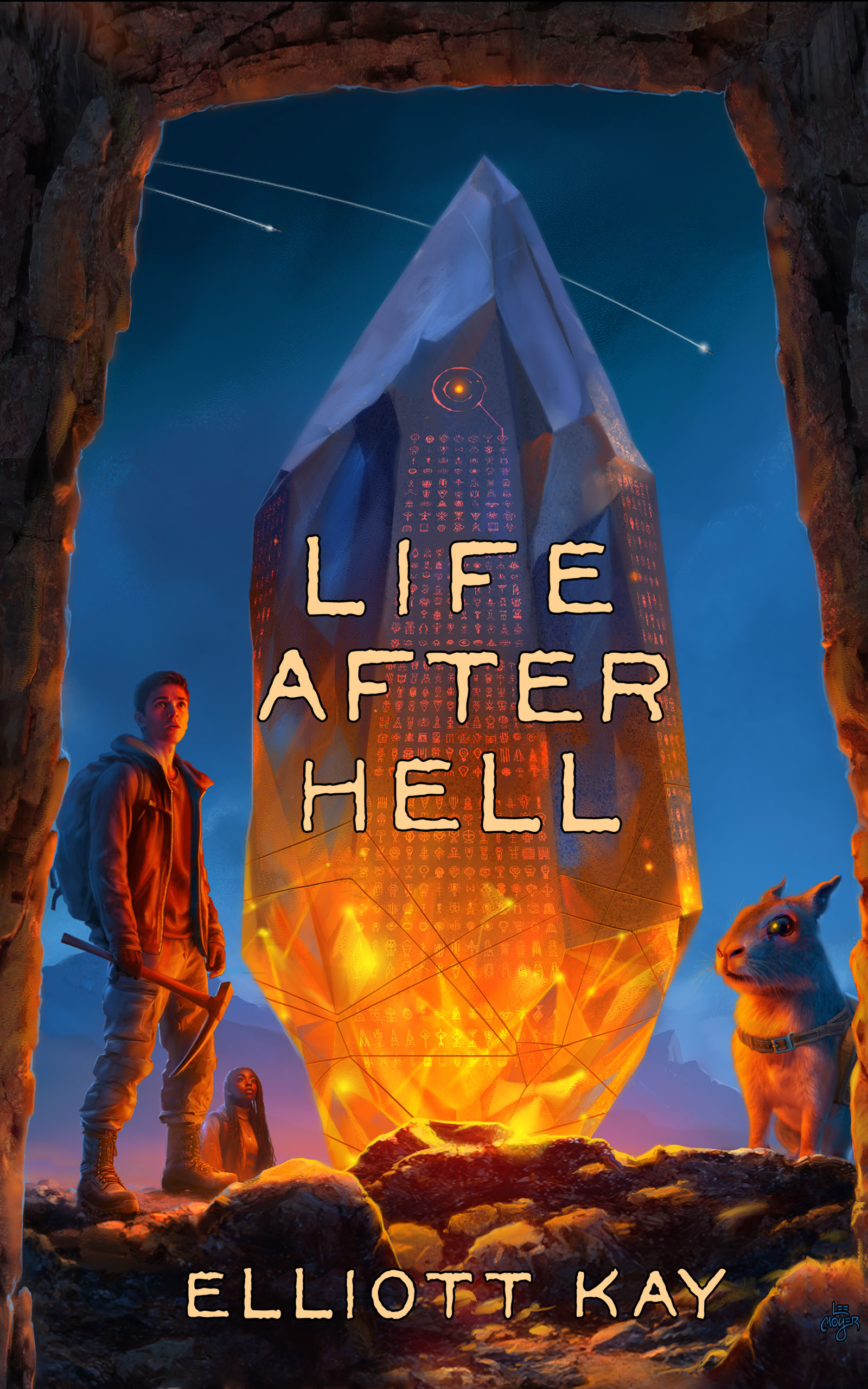
WAR HERO. PIRATE FIGHTER. FRESHMAN DORM ADVISOR.
Even the best schools have problem students. Fremantle University has a bumper crop this year, turning the seventh floor of the north dorm into a vortex of delinquents, drama, and space-age mad science. For Tanner Malone, it’s a breath of fresh air. Anything is better than interstellar war and genocidal aliens.
Those ugly threats haunt Tanner again when an adorable alien refugee comes to him for help. The Runners have barely survived extinction and captivity, and now live under the mercy of a corporate overlord. Worse yet, the menace that nearly wiped them out still threatens their world. Tanner can’t call in the Archangel Navy for help this time—but college life may have given him exactly the allies he needs.
Paperback is nearly ready, too, but needs some cover corrections. Audio won’t follow for a while, as is the pattern for me. But I’m dying to release this, so it’s on the way!
Get the ebook here now! Or if you want a good sample first, the prologue and chapter one are below. As always, thank you for reading!
* * *
PROLOGUE: DIPLOMACY
“Perhaps none have suffered more from Amara’s cruelty than the Runners. The Minoans wiped out their peaceful, Stone Age society on Voltaire and kept thousands of survivors in stasis on the Preserve as future slaves. Humanity believed the Runners extinct when we terraformed their world. They return to a home they do not know at the mercy of strangers.
“The Union forbids individual diplomacy and bargains with alien species. It is our foundational principle. Equally, the Union recognizes the sovereignty of Voltaire. The Runners do not present destabilizing elements of science or technology. They ask only for our compassion. Yet we must also remember the strategic importance of the Runners to the Union as a whole. The Nyuyinaro, Krokinthians, and Yanra are watching. If we are to ally with our strongest alien neighbors, we must be kind to the most vulnerable.”
—Union Assembly Chairwoman Irawati Limanto
Address to the Assembly, June 2281
Reporters turned when the doors opened, looking at Rebecca and her companions—Well, not me, Rebecca conceded readily. They murmured commentary for cameras and mics worn as thread-thin headsets and lapels, or the occasional showy handset. Then, almost as a wave, the reporters turned back to the center of the conference hall.
Really? Hello? Rebecca wanted to say. Five seconds is all you’ve got for actual aliens?
“Mr. Michel, Mr. Michel,” called out the gaggle of journalists at the front. One voice rose above the others, presumably chosen by the CEO on the stage. “Given the situation with Minos, will Destiny shift more of its shipbuilding arm to military orders?”
“Military projects are usually confidential.” From here, Rebecca only heard the answer via overhead speakers. “As a rule, we don’t comment. I will say we had three frigates in production during the attack on Assembly Station. I think the engagements with the Minoans point to the rising value of smaller, lighter vessels over large targets like battleships.”
That sounds an awful lot like commentary, thought Rebecca. And marketing.
A quiet rumble like a high-pitched purr drew Rebecca’s eyes down and right. Stray’s golden-brown furry shoulders rose just past Rebecca’s knee. She walked on all fours, slowing her natural gait considerably to match a human pace. Big black eyes on a capybara-like head scanned everywhere at once. A necklace of stones on a vine and a leather satchel at her left side served as Stray’s only clothes. Her odd trill didn’t translate on Rebecca’s earpiece.
“Something to say?” Rebecca asked quietly.
Stray answered with the chp-chppl of the Runners’ “friendly but out-group” vocal case. The holocom worn on her left paw like a wristwatch provided translation. “Too much,” said the translator in Rebecca’s ear. “It is not my time to speak.”
“I know the feeling.” At twenty-eight and fresh out of Diplomatic Corps training and grad school before it, Rebecca scored a major coup with this assignment. She was still entry-level, and never forgot it. She chose her blue-on-white suit and the tied-back style of her brown hair with that in mind: I’m only the assistant here. Practically an intern. Don’t mind me.
Stray’s size marked her as a similarly young adult among her people. To the Runners, though, an adult was an adult. Stray didn’t have to prove herself to any of her people. Rebecca admired the concept.
Two older Runners twice Stray’s size ambled behind them on all fours, with a slightly larger one on their left. Clearwater walked ahead with Ambassador Sean Young. Each Runner had their long ears back and dark eyes narrowed against the interior lights. Like Stray, they wore only accessories of simple, natural jewelry of their own make and satchels gifted to them by humans.
“Mr. Michel,” asked another journalist, “has the Union Fleet increased reliance on Destiny’s logistical services?”
“We’ve seen some signals. It’s irresponsible of me to say more.” Destiny CEO Jean Michel stood at a thin podium in his black-on-black sans-necktie suit. He was fit, light of complexion, and artificially kept in his mid-thirties. His short brown hair swept to the left. Rebecca sometimes thought Michel might be handsome if he’d led a different life.
“Mr. Michel, any truth to rumors of layoffs?”
“No.” It was an unusually direct response. He wanted the moment that followed.
“The last six years have seen unprecedented turmoil,” said Michel. “Pirates sacked the world of Qal’at Khalil and sparked a civil war across the Kingdom of Hashem. Archangel and NorthStar fought a war over educational debt that shook the Union economy. CDC, our third largest corporate power, fell amid the conflict. The Union forced NorthStar into sovereign statehood, and then Archangel took their major shareholders hostage to demand an end to the war on their terms. Then we learned Archangel had supported those pirates I mentioned.
“As soon as the dust settled, the ancient, long-dead people of Minos violently reemerged from hiding in newly-created human bodies. Without warning, they killed a million human settlers—a crime we answered by surrendering the planet to them.
“Two months ago, Empress Amara of Minos came to the Union Assembly, and a third of Union states voted to grant her right of passage. Then we caught Amara moving a large Preserve of thousands of captured aliens in stasis through Union space, including the Runners of Voltaire. Amara demolished Assembly Hall with stolen, ancient alien technology and killed hundreds on the station.”
“What is this?” Rebecca murmured under her breath. “Is he running for Assembly Chair?”
That thought dropped from her mind as Ambassador Young stopped in the aisle. His tall, stocky build would have suited him to rougher professions, but he had decades of diplomatic experience. His black features only recently showed middle age thanks to longevity treatments. “Rebecca,” he asked quietly, “do you notice what I’m seeing?”
She wondered if she’d missed something, but her first thought seemed important enough: “They didn’t hold any seating for us.”
“Nope,” Young agreed. He was the most senior and the most plain-spoken diplomat Rebecca had met in the Corps. He credited that to growing up in Chicago. Rebecca knew the name as only one of many cities on Earth.
“Now the Nyuyinaro and Krokinthians wish our help fighting the Minoans,” Michel continued. “Our neighbors terrorized us in the Expansion Wars with their superior science. They still hold that edge against us, yet they cannot stand against the Minoans. We can. We must. Not for them, but for our own sake.
“My friends, this is no time for layoffs. We must be agile, yes, but we must also grow.”
Applause swept the chamber. Journalists had the front and aisle seats, but the audience held a great many shareholders and corporate allies. Michel beamed at them all, and then gestured to the aisle. “Speaking of alien arrivals, ladies and gentlemen, I should conclude this session and turn to our guests. Thank you, everyone.”
After-the-cutoff questions rang out, but most people took their cue. According to schedule, the press conference had run for half an hour already. Rebecca had suspicions about that schedule.
Someone in a suit approached Ambassador Young. Rebecca couldn’t make out the words, but context and gestures made it all easy enough to guess. “I think they’re bringing us to the stage to meet with Michel,” Rebecca told Stray.
“Yes,” said Stray. Her ears were bigger and better, after all. The Runners struggled to form human words with their mouths, and thus relied on translator tech, but they understood human languages within mere weeks of exposure. “Is that a stage? I thought stages were for performance.”
“Stages serve lots of different purposes. There are many kinds of performance, too.”
Stray’s big, wide-set eyes offered great peripheral vision. She didn’t need to turn her head as much as a human, which meant the upward tilt for a direct look at Rebecca made a statement. “You mean several things with that.”
“I guess I do.” Rebecca smiled. Though novices with human language and culture, the Runners showed incredible intuition. “It’s not a helpful topic right now.”
“My friends, Rebecca, this way.” Young smiled, too, but his dark eyes flashed a subtle warning to Rebecca. Brace yourself, he seemed to say, or perhaps a grim here we go.
Michel waited beside the stage with his entourage. Media lingered nearby, though staffers and plainclothes security could usher them out if Michel wanted. It was a deliberate choice. One more choice, Rebecca suspected.
“Ambassador Young, it’s nice to meet you in person.” Michel offered a firm, polite handshake. “Naturally, I’ve taken a strong interest in your work here on Voltaire.”
“That’s good to hear,” Young replied with professional warmth. “I’m mostly a facilitator for our new friends. Mr. Michel, this is Clearwater, Sunrise, Stray, Longvine, and Watcher. Thank you for taking this time to meet us.”
“Such time as we have remaining,” Michel clarified. “It’s unfortunate you couldn’t be here sooner. We had hoped for a fuller dialogue than I can afford now.”
“Yes. We were delayed by security concerns downstairs,” said Young.
“I heard. I’m sorry for the misunderstanding. My people are careful,” said Michel—with more than simple conversational volume. Rebecca’s eyes flicked to the nearby reporters.
Clearwater sat upright on his haunches, bringing his head higher, and spoke in a patter of soft growls. Translators relayed, “They wanted to take our claws.”
“Not take, as I understood,” said Michel. “Trim. Blunt. Your claws are potentially lethal, and there are five of you. One or two would have been no issue.”
“Runner society and culture are based on the herd, Mr. Michel,” said Young. “Five is a very small number for just about anything.”
“Your people have guns. We have only our paws,” said Clearwater.
“Yes, well, I instructed my people to drop the matter.” Again, Michel seemed to speak for more than his immediate audience. He smiled deliberately, too. “We can be reasonable and hospitable. That said, I’m on my way to my next obligation. Join me?”
Young and Clearwater agreed. Rebecca wondered why it mattered. Jean Michel could make his own schedule in his corporate headquarters, even on a day of shareholder presentations and media availability. The latter point clicked once they reached a corner doorway, with only her group, Michel, and his entourage passing through. The media stayed behind.
The dread she’d felt since their arrival seemed all but confirmed. She heard Stray’s soft trilling noise again, and another comment in her earpiece. “No one feared our claws. They wanted to delay us. Michel thinks he looks good, and we look bad. To whom? Why?”
Rebecca couldn’t ignore Stray’s question—or her intuition. Quietly, she answered, “He wants to perform compromise.” She didn’t add that he did so by inventing the conflict. Hopefully they could talk that part out later, away from microphones and cameras.
Stray trilled again. Rebecca sympathized.
Natural light filled the hallway from floor-to-ceiling windows on one side. The hall overlooked rolling green hills decorated by suburban luxury developments, with snow-capped mountains in the background. “Lovely view, isn’t it?” asked Michel.
“Elevation can be useful,” said Clearwater. “Life is better lived near the ground. It keeps one connected with their herd, and with the herds of others. Rising too high is isolating.”
“And you have not had the best experiences with people from the stars,” said Michel. He kept walking until they were halfway down the hall.
“The Nyuyinaro rose to the stars together,” said Clearwater. “Perhaps that is why they remain peaceful. Others rose with similar bonds. The Minoans are in many ways separated from one another. Some have power. Most do not.” Clearwater rose on his haunches to look out the window. “Do many of your people see this same view?”
Michel smiled tightly. “Not this one, but they can find others like it. Again, I regret the shorter nature of our visit. It wasn’t my intent. What can I do for you, Clearwater?”
“These skies were once greener,” said Clearwater. “They were brighter than these grasses, which are also new to us. Our return is difficult and heavy with sorrow. We ask for your help in repairing our home. We do not need all the lands we once roamed, but those we have been given do not meet our needs. We wish to begin again in the south, and roam New Languedoc.”
“New…? The continent?” Michel raised his eyebrows. “How exactly did your people spread across the oceans, anyway? You have no boats.”
“We swam as herds,” said Clearwater. “We held together and floated along the currents when they were right.”
“And you just… knew when that would be? You knew the weather?”
“Yes,” said Clearwater.
Michel flashed a curious look to Young, but shrugged and got back to the topic. “The territory you have across Loire is not enough for your people?”
“It is enough for now. It is not enough for new herds, which will grow with time. New Languedoc is the smallest continent. Only the northeast coast is developed, as you call it. We would disrupt your people less if we settled there.”
“That development is mostly resorts and vacation homes. I own a few properties there myself. I’m not sure the other owners would call this option less disruptive.”
“We wish to live beside them, and the many who work for them,” said Clearwater. “We do not need the coastal lands. The rest of the continent could be restored with the environmental samples saved from before Voltaire was terraformed. We have considered ways to compensate the humans who would be affected. We understand what we ask.”
“I’m not sure you do.” Michel glanced to Young, but stayed engaged with Clearwater. “I have advocated on your behalf. I am sympathetic to your plight. Destiny was the first entity on Voltaire to cede undeveloped territory to your people. We’ve donated significant finances to the resettlement project. Some of these decisions are out of our hands. I’m the leader of our corporation, but I’m not in the planetary government. You understand the difference, yes?”
“Oh, better than you might expect,” said Young.
“Then why aren’t you speaking to the Prime Minister?”
“Voltaire’s Senate and Prime Minister answer to conglomerate corporations,” said Clearwater. “Destiny is the strongest of them. Destiny controls the largest portions of Voltaire’s communications infrastructure, financial services, export production, and security. You control Destiny. I am speaking to the most influential leader of Voltaire’s corporate oligarchy.”
“Oligarchy?” Michel frowned. “I’m not sure the voters of Voltaire would appreciate that characterization.”
Stray trilled again—not loudly, but this time others noticed, including Michel and Young. That brought both men’s eyes toward her and her other escort. Rebecca spoke up: “The Runners, ah, picked up that term before they got here.”
“With respect, it’s an understandable view,” said Young. “Destiny’s influence in Voltaire is a fact of life. Your support would be decisive.”
“These things are more complicated than they appear on the surface,” said Michel.
Rebecca put a hand on Stray’s shoulder. The Runner didn’t trill again, but Rebecca felt it coming.
Michel furrowed his brow curiously. “You say you want to reverse terraforming in the interior of New Languedoc?”
“We wish to heal the land as we knew it,” said Clearwater. “A full restoration is impossible. The air and sky are changed for human comfort, yet much of the life we knew can survive and grow under Terran conditions. Many samples were preserved before humans altered this planet. Destiny claimed much of CDC’s terraforming assets. Your company could restore much of the home we lost.”
“Hrm. I wasn’t aware your people had taken such an interest in technology or business.”
“We share this world with your people. We must learn from one another.”
“Yes, I suppose so.” Michel flashed another tight smile. “I’m no expert, but environmental restoration runs a high risk of cross-contamination, and even a chance of the original biome overtaking our terraforming. Yours would have the home ground advantage.”
“That’s another reason we’re proposing New Languedoc, sir,” Rebecca spoke up again. “I can share an analysis of wind and ocean currents. The patterns work to our advantage. Terraforming tech can mitigate the rest.”
“My assistant, Rebecca Dayton,” said Young. “She’s better at the science than I am.”
“Sorry. Yes. Hello,” said Rebecca. “It’s a pleasure to meet you.”
“I’ll take a look at your proposal,” said Michel. “But at first thought, I’m pessimistic. Again, it’s all complicated. We have sixty million people with plans of their own here.”
“Sixty million across an entire world,” said Young.
“Yes. Well. Complicated. I have other complications to attend. Clearwater, Ambassador, everyone, it was an honor to meet you. I wish you well.” Michel and his entourage emptied out of the hall, leaving Young, Rebecca, and the Runners with their breathtaking view and a couple of quiet but visible corporate minders nearby.
“We knew this would be tough to sell,” said Young.
“Yes. I understand your idiom.” Clearwater looked from the closing door to the other Runners. Neither Young nor Rebecca had learned all of their facial expressions and tics yet.
“We might refine our approach,” Young suggested. “I’m not sure Mr. Michel expected us to be so frank. He may have felt challenged.”
“Yes, but not threatened,” said Clearwater. “We intended no threat, and he assumed none.”
“Not threats, no. Another approach might be more effective.”
“Jean Michel holds many secrets,” said Stray.
“That’s common for humans, and especially for people in positions like his,” said Rebecca.
“You are being diplomatic again.” Stray looked up to her directly. “You know what I mean. You agree with me.”
“That’s, ah, maybe a topic for later.”
“We should move on,” said Young.
“This space is not private. Michel’s people will hear us,” said Clearwater.
“That, too.” Young threw another diplomatic smile to their minders. “It might help to keep this meeting to ourselves for now. The media will be curious. It’s good to be open and honest, but we might earn some gratitude from Mr. Michel if we’re discreet. For now.”
Together, they moved to the exit. “We understand,” said Clearwater. “He does not want to help us. I do not think we will change his feelings.”
“Doesn’t cost us to play cool,” said Young. “Michel isn’t the only influential person on Voltaire. We may find other friends.”
“Yes. We need other friends.” Clearwater looked back over his shoulder to Stray with a pronounced twitch of his nose.
Stray answered with two quiet snorts. Rebecca had learned that one: it meant agreement with instructions, like a “yes, sir” with actual sympathy.
More than a few journalists still lingered in the audience hall. Heads turned and faces looked up with interest. Several approached with the usual questions, directed first to the ambassador: Do you have time to talk, what did you and Jean Michel discuss, could we get an interview?
“Every journalist is a set of microphones and cameras,” Rebecca reminded Stray and the others. “Talking to one means talking to a whole herd, over and over.”
“Yes,” said Stray. The others got it, too.
With a glance to assure she was properly ignored by the media, Rebecca leaned closer and said, “I’m curious what Clearwater asked you to do, if it’s safe to tell me?”
“Earlier, I suggested we ask for a friend. He now agrees.”
“Another friend? Who?” asked Rebecca. The resettlement project involved dozens of Union diplomats, scientists, and even Fleet officers. Despite Voltaire’s corporate oligarchy, the planet wasn’t shy of activists and ordinary people who wanted to help the Runners.
Stray sat on her haunches and fished the simple tablet from the satchel along her hip. Though the Runners lacked true opposable thumbs, their front paws were articulate enough to manage basic tool use. Rebecca didn’t understand why Stray preferred the tablet to simple speech until Stray wrote out a single human name. She held it up for Rebecca’s eyes only.
Rebecca swallowed a gasp, a curse, and a groan all at once.
CHAPTER ONE
OFF THE BOOKS
“The Union delegates to Project: Alliance have opted against requesting Tanner Malone’s further assistance, and I concur with their decision. No one denies Mr. Malone’s role in the inciting events of our current alien relationships. Candidly, however, his helpful actions are often equaled or outmatched by his disruptive influence. The Union needs cooperation and discretion in this new paradigm of diplomacy.
“By all accounts, Mr. Malone is happier where he is.”
–Union Fleet Admiral Divya Khatri
Project: Alliance Communications (top secret), June 2281
“We’re up against college kids? You’ve gotta be shittin’ me.”
“I wouldn’t make this up. It’s fucking embarrassing.” Pete opened and held the car door for his boss with the subtle, constant wariness of his days as a corporate troubleshooter. The late hour and deserted state of the alley made him no less vigilant. He was big, clean-shaved, and barrel-chested in a dark “executive protection” suit kept from his old job. Nicholas wanted more guys like Pete on staff—except now that seemed like overkill.
“They’ve gotta be a cut-out, right? Maybe decoys?” Though not much smaller than Pete, Nicholas had ascended from the hands-on side of the business to the head of the table decades ago. Fifteen minutes ago, he’d been at a beachside villa cocktail party. Then Pete’s hovercar brought him through the financial district into this clean but dreary industrial alley.
“The trail ends with these guys,” said Pete. “We twisted a couple arms to get bank records. The partials on their holocoms match. We haven’t forced full access yet. Lachlan said you’d want to be there for that.”
“Lachlan knows I want everyone to think twice before they get rough… or at least he should,” Nicholas grumbled. It was entirely possible his son never took that thought farther than, “Dad’s a micro-manager.” They’d have to talk about that. Again.
The heavy employee door slid open without need for a knock or credentials. Two men waited inside wearing light but out-of-season jackets to cover their weapons. They nodded respectfully to the boss, who returned the gesture without remembering their names. Beyond them, the workshop and its twenty benches, coolers, and gear sat idle. Bento and other ready meals sold better when assembled by hand rather than automation, which meant keeping employees on a normal clock.
Nicholas saw great value in the legitimate sides of the business, hence the cocktail party full of potential new contacts and allies, now abandoned for this mess. It occurred to Nicholas that his mood might not reflect the caution he wanted from his son and their subordinates.
The supervisor’s office opened up just like the employee door. Nicholas and Pete entered a room anchored by a conventional desk setup, a humble holo suite for conferencing and training, and the cheap faux-wood décor popular ten years ago. Lachlan sat behind the supervisor’s desk with his guys standing to either side. The spread of images along the desktop had to be the building’s security dashboard, including all the camera feeds.
With a glance, Nicholas took in the three strangers seated in front of the desk: two guys and one girl, white, Pacific islander, and black respectively, all in casual summer clothes. Longevity treatments could make a guessing game out of any adult’s age, but these three seemed too young for that problem. Their builds and the nervous looks on their faces backed that up, too.
“You got here quickly.” Lachlan vacated the chair for his father.
“Can’t say I’m happy about it,” said Nicholas.
Pete frowned at the setup. “We should separate them.”
“Nah, I don’t have patience for that.” Nicholas claimed the chair with Pete staying close. That left the whole impromptu committee on one side of the desk. “Who have we got here?”
“The big boy with the buzz cut is Analu Niko,” Lachlan explained. “He put up a struggle, so we had to stun him, hence the drool on his shirt. Gotta be an athlete with that build. Miss Braids here is Rhea Nweke. She had a couple unmarked hypo-vials in her pocket—the fun kind. Pretty sure they came from our supply chain.”
“Aw, really? Awkward,” Rhea muttered.
“Shut it,” said Lachlan. “And Mister Stiff Upper Lip is Arthur Freeman according to the emergency screen on his holocom. Accent sounds like he grew up speaking French, so he isn’t from Fremantle. He doesn’t want to talk to us much at all. Doesn’t want his friends to talk, either.”
“Now, why’s that?” asked Nicholas.
“Getting kidnapped out of the Terrace might have something to do with it,” said Analu.
“Getting kidnapped should make you think twice about being lippy,” said Nicholas. “This isn’t your school. We’re not constables. You don’t have a right to silence and you don’t have any fuckin’ lawyer. Careful answers are your only way out of here alive.” He let that sink in. “You were at the Terrace? Out shopping? Answer.”
“Yeah,” Rhea said reluctantly. She caught a glance from Arthur and shrugged. “They know.”
“Shopping for what?” asked Nicholas.
Again, they were slow to answer. Rhea took a breath, but Arthur spoke with the lingering accent Lachlan had observed: “Only clothes and such. Same as anyone else.”
“Same as anyone else?” Nicholas pointed to one of his guys and then to Arthur. The goon stepped in with a low punch for the young man in the chair. Arthur buckled with a sputter and groan, but managed to stay in his seat.
“Whoa! Stop!” Analu objected.
“You don’t need to do that,” said Rhea.
“We don’t?” asked Nicholas. “Shopping at the Terrace, ‘same as everyone else’—everyone else with money. College students either come from money or they’re broke, and you don’t smell like money to me. You don’t go someplace like the Terrace without a reason, so what was it? Or do we just beat it out of your friend here?”
“We could do that anyway,” suggested Lachlan.
“All right, fine,” said Analu. “Except it’s true, though. We were shopping for clothes. We wanted to find something sexy for your wife.”
For exactly three seconds, all five captors blinked in wide-eyed disbelief.
“Analu, why?” Arthur wheezed.
The goon on punching duty drove a meaty fist against Analu’s temple, and then backhanded Rhea in response to her objections before returning to his first target. Analu weathered the blows better than the others, though that wasn’t saying much. They were all defenseless against someone who punched as a semi-regular job duty.
“Smart enough to get into college, huh?” Lachlan scoffed.
“Shush,” said Nicholas.
“Stop,” said Rhea. “You’ve made your point.”
Nicholas let the goon get in one more punch. “All right, enough.” His subordinate stopped as instructed. “Okay. Rhea, was it? What were you there to buy?”
Rhea glanced with concern to Analu on her right and then with guilt to Arthur on her left. Arthur steadied his breath rather than object. Rhea looked down at the desk. “Bio-mods. There’s a vanity clinic at the Terrace. Good ratings, good tech, independent from Lai Wa and NorthStar. You don’t need a whole plan or approval process.”
“Bio-mods are expensive,” said Nicholas. “All those features make ‘em really expensive. None of you look sick. No obvious disabilities, too young for longevity. And it’s a vanity clinic? What kind of bio-mods were you trying to get? And all three of you?”
“Just me,” said Rhea. “I had an appointment, but I didn’t want to tell anyone until it was confirmed. You have to bring someone, because the pain meds can leave you loopy, y’know? I meant to only bring Arthur, but then Analu came ‘cause he was bored. It’s…” Again, her eyes flicked to Arthur, catching a slight shake of his head.
“Hey. Don’t look at him. Look at me,” Nicholas demanded. Rhea complied, though reluctantly. Her eyes stayed low in Nicholas’s direction. That was good enough. “You talk to me. What were you after?”
“It’s embarrassing,” said Rhea.
“Embarrassing enough to get what they’ve got?”
The goon at Rhea’s side shook his arm out, but clearly he was ready to provide more of the same punishment he gave Analu.
“It’s gastric,” said Rhea. “When I get nervous or excited, I have… problems.”
Arthur blinked. Analu blinked even wider. So did their captors.
“Pills work, but sometimes I forget and sometimes they’re not enough. It’s a miracle I haven’t freaked out yet. I went to the bathroom right before we got grabbed.” Rhea’s explanations turned to a mumble. “The worst is actually when I’m with a guy, and—”
“Stop.” Nicholas held up his hands. “Stop. I don’t need details.” He looked irritably at Lachlan, who seemed as taken aback as everyone else, and then to his other side.
Pete had his arms folded and wore a deep frown. “Body-mod shops can do that kind of work,” he conceded. “They’ll grow you a whole enhanced intestinal tract if you pay well enough.”
“I’ve got mods. Why haven’t I heard of this?” asked Nicholas.
“Digestive repair isn’t really a big hook for people who don’t need it,” said Pete.
“Did you…?” Rhea asked in a smaller voice than ever. Again, everyone blinked. Rhea shrugged and nodded between boss and employee. “I mean, there’s no shame here, right? We can all talk about this like adults.”
“This answers some questions, but not all,” Pete went on. “That stuff isn’t the kind of expensive we’re worried about. On the other hand, this is a good story if you’re playing for time.”
Rhea frowned. “Why would I play for time? We want to get out of here, not drag this out.”
“Nah. Hold on.” Pete gestured to Arthur. “He kept everyone quiet, then gave us a bullshit answer, and this one got defiant,” he said of Analu. “Like bad kids who know nobody’s gonna believe the first answer they give. If you crack right away, you make it look too easy.”
Lachlan scoffed. “Muscles here is bleeding and dizzy. You call that easy?”
“That’s the part they can’t control,” said Pete. “Someone had to risk it, and you’re the one best built to take a hit, right, Analu? Is it—not football, no. You’re too stocky for that. Rugby? You knew the play and knew you’re the one for it… which makes me think the one who shuts the rest up and then speaks first is the ringleader.”
“You think this is a setup?” Lachlan scowled.
“No. Nobody wants to get caught. They wanted to get away with it, but they’ve been caught before, and now they’re here. This is improv—and you,” Pete considered, pointing at Rhea. “Embarrassing story, straight face, following through. Are you a theater major?”
“Pff. What? No.” Rhea sputtered slightly less than Arthur after the gut-punch.
“So are you gonna have a butt problem or not?” asked Analu.
“I mean, I might,” said Rhea.
“You will when I put my foot far enough up your ass,” said the bruiser between them.
“Stop,” Nicholas ordered. He stared at Arthur. “Yeah. It makes sense. You don’t have to be the talker to be the leader. But why the fuck would you play for time when…? Lachlan, you checked their holocoms? You searched them all?”
“Yeah. Got all their shit right here.” Lachlan nudged a tray on the desk. It held an assortment of small items—sunglasses, a bottle of sunscreen, a pill case, Rhea’s tiny contact injector tubes, and cash cards—along with a jeweled cuff earring, a class ring, and a simple and sturdy wristwatch all easily recognizable as holocoms. “Nobody got a call out when we grabbed ‘em. Nothing is active.”
“Okay, so why play for time if—?”
The door slid open for another college kid: slim, on the tall side of average, dark hair cut short, his skin deeply tanned. He wore an open flower shirt of white-on-blue over a black t-shirt with the stylized FU logo of the university. Green eyes took in the scene of captors and captives alike. He let out a tense breath and muttered, “Fucking Christ.”
“Who the hell—?” asked Nicholas.
The goon between Analu and Rhea rushed the doorway. The newcomer stepped back out of view, warning, “Whoa, let’s talk, I don’t—!”
They heard a bone-crunching impact and, “Aarh-aagh!”
Pete, Lachlan, and Lachlan’s other guy pulled their pistols. Nicholas kept his eyes on the three guests all leaning away from the door without daring to get out of their seats. Their worried looks told Nicholas this wasn’t a setup. He raised one hand to pause the rest of his guys. He had faith in his people, including the bruiser outside.
Then came the heavy thud, the sharp, “Urk!” and then the white flash with an electric crackle. Lachlan’s bruiser tilted unconsciously across the doorway on his way to the floor.
“Okay,” said the stranger outside the door, “if you’re not shooting or rushing, can we please talk this out?”
“Get in here and show your hands. Now,” Pete demanded.
The newcomer leaned partly into view with his left side still blocked by the doorframe and his right hand behind his hip. He frowned skeptically. “No. C’mon.”
“I’m not asking, I’m telling… shit.” Pete blinked and swore again under his breath. “Fuck.”
“Yeah, there it is,” said the newcomer. “Look, there are four of you, but I’ve got cover and room to move. Let’s just accept this fraught tactical situation and try talking our way through the rest, okay? Keep the guns low and I won’t have to shoot anyone, and then we don’t have to find out what happens next.”
“Sir,” Pete began in a warning.
“Wait, what the fuck did you do to the security system?” Lachlan jabbed a finger at the holo screens laid out against the desk, now showing only static. “Where are Tilo and John?”
“They’re, um, alive. They’ll be okay. This guy, too.”
“Alive? Who the fuck are you?” Nicholas demanded.
“Sir, that’s Tanner Malone,” said Pete.
“Am I supposed to know who…?” Nicholas stopped.
“Yeah. Takes a second when it’s out of context,” said Tanner. “Lots of people don’t remember me at all, which is kind of nice, honestly.”
“Christ. You look the same as these idiots,” said Nicholas.
“I do,” Tanner conceded. “Lots of media gave me an extra five or ten kilos of digital muscle. I guess the truth is more embarrassing for NorthStar and less scary for their narrative. They’ve shut up about me lately, but the impression sticks.”
Nicholas stared. His guys stared, too, though they mostly wondered if they were about to start shooting. Part of Nicholas wondered why they shouldn’t.
Tanner nodded to the three captives seated in front of the desk. “I’m their dorm advisor. I’d really like to resolve this without—” He grimaced at the sight of Analu, but moved on with a tense breath. “Further violence. Whatever this is, anyway.”
“Do you know who you’re dealing with here?” asked Lachlan.
“In the abstract, yeah. You kidnapped three people from a high-end shopping center and brought them to a lunch-packing plant with weirdly strong security. And there’s this guy.” Tanner nodded to the bruiser laid out in the hallway. “And the guns you’re barely hiding. I can make a decent guess who you are. I don’t know why you grabbed my friends.”
“You don’t know?” Lachlan frowned.
“You’ve known them long enough that it shouldn’t surprise you. One of them surfs furniture down the stairs for fun and another borrows hazmats from the lab for homework. Don’t even get me started about her. I’m lucky our dorm is still standing. No, I don’t know why you grabbed them.”
“I only did that a few times,” mumbled Analu.
“Dorm advisor?” Nicholas narrowed his eyes. “So, these pissants are your responsibility?”
“Enh,” Tanner grunted without any clear commitment. The prisoners shared an equally uncomfortable grimace.
“They stole from us,” said Nicholas. “I’ve got four hundred eighty-three thousand credits missing from one of my accounts, and the trail leads straight to these three.”
“That’s an odd number. Did someone hack your bank?”
“No, they—” Nicholas stopped with a fuming glance at Lachlan. “That’s not important.”
“It seems important. How do we know it was them?” asked Tanner.
“Bank records and biometrics,” said Pete. “I don’t know how they matched all that to false names, but the keys match. It’s them.”
Tanner winced like he might know, or at least like he wasn’t entirely surprised. “Okay, but you can’t just drain someone else’s account for that kind of money. Don’t you need three-factor security and some sort of live… oh, wait. You’re crooks. Right.”
“Cute,” said Nicholas. “This wasn’t like that. It was set up as a business transaction, not some personal transfer. Real estate moves like this all the time, especially…” Again, he stopped and frowned. This time, he made a point of not looking at his son.
“Did… did somebody sell you an asteroid?” Tanner asked.
“They did,” Lachlan snapped. “It was all—it looked legitimate! Coordinates, certified surveys, holos, competing bids, all of it! Five percent down, per standard practice!”
Nicholas gave up trying to hide the doubt in his expression. He didn’t care anymore.
“Four hundred eighty-three thousand,” said Tanner. “That’s five percent of a credible asteroid?”
“Half of one, anyway,” said Lachlan.
“This wasn’t random, either,” said Pete. “We backtracked all the communications. They covered their asses, but it was clearly a targeted offer.”
“So they weren’t looking for random suckers?” asked Tanner. “They sold a make-believe asteroid to you, specifically?”
“That’s another question for your friends.” Nicholas turned his glare from Tanner to the others.
“Okay?” Tanner prompted them.
Analu and Rhea grimaced with embarrassment. Arthur lifted his head with a defiant look for Lachlan. “You gave a quarter million credits to a Sovereign Humanity front party and another two hundred for a rally against taking refugees from Hashem. The rest aligned with taxes and finance fees.”
Nicholas made a face. “This was political?”
“Please tell me you still have their money,” said Tanner.
“Mostly,” said Rhea.
“It wasn’t for us. We weren’t gonna keep it,” said Analu.
“Tanner, they’re—”
“Yeah, I know, Arthur,” said Tanner. “They already did their shitty things with their money. We don’t help anyone by getting into a fight with them.” Despite addressing the captives, Tanner kept his physical attention focused on the captors the whole time. “How much is gone?”
“About twenty-seven thousand,” Rhea admitted.
“Twenty-eight,” Analu corrected. Arthur said nothing.
“Aw fuck.” Tanner took a long breath. “Okay. I can cover that. You guys can have your money back. No harm done.”
“No harm?” Lachlan scowled.
“You got inconvenienced and a couple of your guys had a rough night, just like my people. Everyone learns a lesson. Nobody gets hurt worse. No money lost. We good?”
“Tanner, you don’t have that kind of money,” Arthur hissed.
“I do,” said Tanner.
“Aw shit.” Analu seemed to catch on—like he knew this would hurt Tanner, perhaps badly.
“You really want to avoid a mess here, don’t you?” asked Nicholas.
“I do,” said Tanner. “No violence, no vendettas. That’s all I want.”
“All right,” Nicholas decided. “We get our money back, no one needs to get hurt.”
“Okay. Good,” said Tanner.
“That doesn’t cover the interest, though.”
Tanner’s jaw set.
“You and these punks put us through a lot,” Nicholas explained. “This is about more than cash. It’s a distraction from other business, and that costs us. And you? Famous, connected bigshot? You can make up for that—and nobody gets hurt.”
“Don’t do this,” said Tanner. “Don’t—you. Bodyguard guy. You know better, don’t you?”
“I’m afraid I don’t know what you mean,” Pete replied with a level-yet-threatening ease.
“Yes, you do. You… fuck.” Tanner sighed. “Every fucking time. Everyone who recognizes me thinks, ‘Oh shit, he’s that psycho from the Debtor’s War and all the news stuff,’ and then they’re afraid I’ll snap and start killing people. Nobody wants to get near me. Everyone freaks out except the professional bad asses. You idiots think, ‘Wait, this guy? This is the guy from the news? I thought he’d be bigger. He’s not scary. He’s soft. All the stories must be propaganda.’ And they are propaganda and bullshit, except the parts that aren’t.
“Normal people stay scared and keep their distance. Tough guys blow it off. It’s the worst of both worlds, every fucking time.”
“Tanner… are you okay?” asked Rhea.
“Not really,” said Tanner.
“It’s a cute rant, but if you were gonna do something, you’d have done it,” said Pete. “That’s why I don’t buy the media spin. Maybe you’ve got some cover. That’s your only advantage. You’re looking at four to one, with collateral in between.”
“It was eight to one when I walked in here,” said Tanner. “Now I’ve only gotta fight two of you.”
Nicholas frowned. “That’s not—”
Tanner blasted to Lachlan’s side with the stunner he’d held behind his hip. The white flash of light turned Lachlan’s henchman into a jerking and flailing obstruction for Lachlan and Pete while Tanner ducked back behind cover. As if they expected this, all three captives dove for the floor. Pete’s return fire came only half a second too late, and Lachlan’s a heartbeat after that. The flashing light and sudden heat of their lasers sent tiny thundercracks through the room. Unarmed and unready, Nicholas ducked behind the desk.
Suddenly, Tanner’s math made sense.
“System! Alarm! Lights!” Tanner barked from the hallway. Piercing notes burst from the nearly invisible speaker in the ceiling and another within the desktop holo projectors. The office lights doubled in intensity while the hallway lights died completely. In an instant, conditions for the fight became entirely uneven.
“Welcome to the Fresh All Week family!” announced a too-bright, too-loud holographic woman manifesting to the left of the desk. It was one more thing for Pete to consider and disregard before he fired again. Tanner swung around the door frame, high rather than low as Pete expected, and missed Lachlan with his stunner. He ducked even as he fired, barely avoiding Pete’s lasers, and shot again before whirling back out of the doorway.
Lachlan gurgled, fell against the desk, and slumped to the floor on top of his unconscious assistant—and halfway across his father, who shoved him off. “Pete!” Nicholas shouted.
“Sir, grab a gun!” Pete switched his laser pistol to rapid fire, sending shot after shot through the doorway to keep Tanner busy. “He only has a stunner. I’ve got this.”
“What?” Nicholas asked, but caught on as the word left his mouth. Lachlan’s gun laid on the floor in front of the desk right where any of those stupid kids might grab it. Nicholas lunged under the desk and snatched it away barely ahead of Rhea. He felt her hand against his as he jerked the weapon back, but then the heat of the pistol’s barrel overrode every other sensation. Hissing with pain, Nicholas dropped the weapon at his side.
Then he noticed Pete was gone. He looked over the desk to see his bodyguard stride toward the door, still firing rapidly to suppress their attacker in the hallway. That left Nicholas with his own problems. He grabbed Lachlan’s pistol properly this time, accepting the pain in his fingers for the benefit of control.
Nicholas was ready to get up and shoot when Analu tackled and overturned the desk. The older man yelped with fright and pain as wood and metal pinned him to the floor.
The burst of rapid lasers kept Tanner outside the doorway. He feared the enemy would shift to shoot-the-hostages threats, but he sensed the charge coming. A point-blank duel of laser versus stunner was suicide. Tanner snatched his only other weapon off the floor.
Pete anticipated some ambush or trick. He held the pistol in close, knowing better than to lead with a weapon that might get grabbed. Blast after blast struck the wall outside the office, kicking up sparks and holding the enemy at bay until it would be too late. Pete was ready for a counterattack, and ready for the electric charge of a stunner, too.
He wasn’t ready for Tanner’s ten-kilo bag of discarded fish bits and vegetables. A laser blast burned the bag open as Tanner swung it around the corner, but the bulk of its mass and weight stayed mostly together as it crashed into Pete’s hand, weapon, and chest all at once. Tanner continued his whirl into the doorway, blasting Pete with the stunner from inches away.
“Ggnnh!” Pete growled. The bag staggered him only by a step; the stunner seemed even less effective. Tanner had already half expected Pete would have an anti-shock implant. He swatted Pete’s gun hand aside with his own. The two men crashed into one another elbows-first.
Not surprisingly, the bigger man got the better of it. Pete shoved Tanner backward, but at the cost of Tanner’s open hand clamping down on Pete’s weapon and turning it away. Another laser blast dug into the office wall and kicked up sparks. Tanner slammed his stunner into Pete’s temple, stomped on Pete’s knee, and headbutted him in the nose at a merciless pace.
Momentum and ferocity countered mass. Tanner struck again and again with his right hand while his left twisted and kept the enemy’s weapon turned away. Both men lost their balance, but that still worked in Tanner’s favor. He kept enough control to push Pete’s head back as they fell.
When you’ve got no other weapon, Gunny Janeka reminded him from years ago and far away, you usually still have the floor. The loud bump of Pete’s skull against the tile punctuated that memory.
Pete grunted and slurred, still conscious but bleary and hurt. Tanner planted a brutal left hook across his face to keep him down. Then he risked a frantic glance to the rest of the scene.
Arthur and Rhea stood nearby, the latter with a pistol in her hand but not with any intent to fire. Analu kept one foot on the overturned desk with the rest of the bad guys buried beneath it. “Holy shit, Tanner,” Analu blinked.
“You’re okay?” Tanner huffed.
“Will be.” Analu’s face bled from cuts inflicted by bare knuckles, but he was upright and lucid. “You?”
“Yeah.” Tanner grabbed Pete’s laser pistol, stood straight, and let out a grunt of pain. His seconds-long brawl with Pete hadn’t been one-sided.
“You hit that man with garbage,” said Rhea. “Literal garbage.”
“Yeah,” said Tanner.
“Why are you carrying garbage?”
“Because when you take a hostile corner, you want to lead with a distraction like a grenade or something flashy, and… and I couldn’t find anything else.”
“Why didn’t you just zap him like the others?”
“I did. He’s gotta have shock-shunt implant. Things are crazy expensive.”
“So zap him again,” said Rhea.
“I can’t when we’re tangled up in…” Tanner dropped it with a frown. “Whatever. If you’re asking all these questions, you’re okay.”
“Yeah. I’m fine,” she confirmed.
Tanner looked again at Arthur with the same concern and resolved it with a nod. Then he moved past his friends and motioned for Analu to help turn the desk over. Nicholas flinched as his only cover from danger pulled away, and again when he saw Tanner standing over him with a weapon in each hand.
“I really wanted to fix this without fighting,” said Tanner. “I’m sick of hurting people. I was ready to gut my savings and fuck up my tuition plans to avoid it. Do you get that? I don’t want to hurt anyone, but you had to push.”
Nicholas only swallowed and watched Tanner stick the stunner in the pocket of his pants—and keep the laser in his other hand.
“I used to be a normal kid,” Tanner went on. “I was just like—” He gestured with his empty hand at his friends, but frowned. “Okay, I was like people like them. Then my life filled up with hyper-aggressive assholes like you dorks. You think you smell weakness and you’ve gotta pounce. And then when you finally fuck up and everything’s burning down, you figure it’s someone else’s fault.
“Now you’re waiting for me to kill you, aren’t you? Because you still think everyone else is just like you. You think that makes it okay to be an asshole.”
“Uh… Tanner, we’re not…?” Analu began warily.
“No. C’mon,” Rhea said—frowning more at Analu than Tanner.
“No,” Tanner confirmed. “World might be better without him, but no.”
“Okay, but what do we do? We can’t take this to the constables,” said Arthur.
“Look, keep the money, all right?” said Nicholas. “Forget about it. This isn’t worth—”
“That doesn’t fix anything,” Tanner interrupted. “You’re not getting your money back. You had that chance, but you were an asshole. And you’ll be an asshole again as soon as we walk away, unless…” He inhaled, considered, and nodded. “Political donations. You dress nice, you play in politics, and you kidnap people. Yeah, I know who you are. Okay. Get your stuff,” he told the others, and then back to Nicholas: “You. Open up your holocoms.”
“What?” Nicholas blinked.
“Your holocoms. All of them. Don’t try to tell me a crook like you has only one.”
“Here. Hold on.” Arthur claimed the class ring from the mess on the floor to conjure a holographic keyboard floating in the air. He tapped in a seven-figure alphanumeric code to open a menu screen and then scrolled to an unnamed triangle icon. A string of codes appeared on his screen. “Thirteen holocoms in the room. Only… nine of us,” Arthur said after turning to count. “One’s in the desk setup, and we’ve each got one. That’s three extras on the bad guys.”
“Two extras,” Rhea muttered, and then frowned at her companions. “Don’t judge me.”
“How the fuck…?” asked Nicholas. “You can’t just ping every holocom in an area! Not without codes and privacy overrides. What kind of tech is that?”
“You can if you stay ahead on tech security news.” Arthur glanced uneasily at Tanner. “Spy software. Bought it on a black-market forum.”
“It’s fine.” Tanner kept his focus on Nicholas. “Open them. Now.” He didn’t shout or snarl, and in truth didn’t think about methods or angles of pressure. He didn’t care—and didn’t notice the difference his sincerity made.
Nicholas activated the holo screen from his ring-mounted device, smaller and fancier than Arthur’s. Biting down on his defeat, he then tugged on a pin under the collar of his shirt to activate a second screen. “What do you want? More money? You want me to transfer—?”
Tanner snatched the holocom pin from Nicholas’s collar and held it out to Arthur without looking. “Is it still locked? Any security on it?”
“Um. I don’t… it’s open,” said Arthur. The pale expression of their captor seemed to confirm it. “I think he had all the locks on biometrics.”
“Cancel the security,” said Tanner. “Copy the whole thing. Every file, every contact, all of it. Download everything. No cash transfers, just data.” He held his glare on Nicholas while Arthur got to work. “This is mutually assured destruction, jackass. If you come after us, if anything happens to any of my residents or their family or friends, if you fucking sneeze in our direction, it won’t just be me coming after you. I’ve got two journalism majors in my dorm and a bucket of computer engineering students. If anything sketchy happens, whether I’m alive or dead, this goes out to every media outlet and legal agency on the planet. You got me? Change passwords, cover up whatever you want, it won’t matter. Everyone will still tie you to this and whatever ugly shit is in that holocom. If it’s awful enough, maybe we send it all out anyway.”
Nicholas swallowed his objections.
“Is that it?” Analu wondered. “I mean, is that enough?”
“It’s enough if he’s not a fucking idiot,” said Tanner.
Rhea seemed satisfied until that comment. Then she frowned at Nicholas again.
“Okay, almost… yeah. Got it,” said Arthur. “Full copy.”
“That was fast,” said Analu.
“I keep my piece clean and I use good stuff,” said Arthur.
“Okay. Give it back. Keep the guns. We’ll throw them away somewhere. Let’s go,” said Tanner.
Arthur tossed the holocom back at Nicholas. Analu lead the way at the door, careful to look first. With Arthur following, Tanner waited only on Rhea—who leaned in close over Nicholas, but pointed back at Tanner.
“He didn’t know about you until an hour ago. He found you and beat you and your guys with garbage.” She leaned back, satisfied that she’d made Nicholas blink. “You ought’a sell all your shit and find a new planet if you’re smart. Take all your dumbasses with you.”
Tanner followed her out. The hallway was still dark and quiet. Arthur and Analu lingered ahead while Tanner caught up with Rhea. “Thanks for backing me,” he mumbled.
“You made a good threat, but it needed a kick at the end,” she said.
“Yeah, I don’t threaten much. You’re good at that.”
“Theater minor,” she said as if correcting someone.
“Hm?”
“Nothing.”
“Walk faster,” said Tanner. “He’ll be calling for help.”
“Hey, which way are we going out?” asked Analu. “Through the freight, or is there another back way in?”
“Employee door, that way,” said Tanner. “I spent fifteen minutes looking for a quieter way in, and then I saw the boss show up and figured, ‘Fuck it.’ I was worried every minute was an even bigger risk. Walk faster.”
“Fifteen minutes?” asked Arthur. “We knew you’d hear we were in trouble, but how did you find us so fast?”
Tanner gave him a look and kept walking.
They passed the assembly floor, the cold stores, and the break room. The pair of guards were still strewn in the hallway where Tanner had left them, both unconscious from stunner blasts and the brief brawl. The broken wall screen tilted across one guard’s back made the fight look worse than it was, at least to Tanner’s mind.
At the exit, Tanner stopped everyone so he could look first for further trouble. He lead the group through the alley alongside the next set of light industrial buildings. Along the street, they found a familiar gravlift van—and the one resident of their dormitory floor still allowed to check a vehicle out of the student utility pool.
“Oh god, you’re okay.” Phoebe came out of the van to meet them halfway, crashing into Rhea with a hug of relief. Her simple capris and loose beachwear top fit the same easy style as her long blonde hair. She stood almost eye to eye with Rhea, but she usually seemed like the smallest, youngest, and most vulnerable of their dorm floor. Usually, Tanner corrected silently.
“Get in the van,” said Tanner. “Hug it out at home. Let’s go.”
“Wait, you’re not okay,” Phoebe corrected. She looked at Analu with a gasp. “Oh gosh. We need—is there a first aid kit in the van?”
“Probably not,” said Analu. “It’s fine. I’ve gotten hurt worse on the field. They hit Rhea, too.”
“They did?” Phoebe gasped.
“Not as bad,” Rhea muttered.
“It’s not bruising yet,” said Tanner. Then he noticed Phoebe’s pale expression as she turned to him. “No, I didn’t kill anybody. Everyone’s gonna be fine. Van. We’re leaving.” Tanner got into the front passenger seat, looked around the streets, and took a long and steadying breath.
The others piled into the back seats while Phoebe took the wheel once more.
“Tanner, seriously: how did you find us so fast?” asked Arthur.
“I didn’t. Phoebe followed you.”
“What?” asked the other three students.
“I was there when they grabbed you!” said Phoebe. “I was just coming back from the line for ice cream. You knew I was right there. We made eye contact.”
“Right, which is how I knew you’d call for help,” said Arthur. “Finding us is another matter.”
“Can we please go before we get more mobsters?” Tanner asked with fraying patience.
“We’re going. We’re good.” Phoebe brought the gravlift half a meter over the pavement, turned in place by a hundred and eighty degrees, and drove toward the main street. She mindfully turned the navigator off. “I followed you from the Terrace.”
“How?” asked Analu.
“Remember when we were talking about Lisa’s ex stalking her, and Tanner talked about how to spot someone tailing you?” Phoebe shrugged. “I just kinda did the opposite of what he said.”
“Holy shit. I barely remember that conversation,” said Analu.
“I barely listened,” said Rhea.
“It shows,” said Tanner.
“Wow. Salty,” said Rhea.
Tanner took a sharp breath, but rather than retort, he looked around. They were near the expressway now, with ordinary traffic and active businesses lighting the streets. He saw hovercars. Pedestrians. People on dates, shopping, enjoying a late evening. Being normal.
His second breath was slower and steadier. He didn’t speak until he released it, but the others had all shut up. They knew.
“Is your PTSD activating again?” asked Phoebe. “Or rising, or flaring, or whatever?”
“No, my PTSD isn’t—! You scammed actual fucking mobsters? For half a million?” Tanner asked.
“If you’re gonna do it, do it,” Rhea murmured.
“Oh my god. You got fully kidnapped and had a gunfight in your face and you’re not the least bit freaked out.”
“I am,” said Arthur.
“Little bit,” said Analu.
“There was a gunfight?” asked Phoebe.
“Mobsters?” Tanner pressed.
“We didn’t know that part going into this,” said Arthur.
“Okay, so you thought you were scamming normal people?”
“We thought we were scamming rich bigoted assholes,” said Phoebe. “This family and the trash they support came up in my hospitality management class, so I did some digging. It was pretty clear they were awful, I just… didn’t catch the actual crime stuff.” She noticed Tanner’s wide eyes, but kept her own on the road. “Don’t look at me like that.”
“This was your idea?” asked Tanner.
Sullenly, she admitted, “It kinda came up in a group discussion.”
“I suggested it first,” said Arthur. “I wasn’t serious until we kept talking. Phoebe did the research. Rhea came up with the pitch and pretended to be the live agent for the sales call. I set up the tech and finance side. It should’ve worked, too. The whole chain should’ve been private, but they threatened some people from one of the banks. I didn’t expect that part.”
“Yeah, people are usually the vulnerable part of most systems,” Tanner grumbled. Then he turned in his seat and looked at Analu. “What did you do?”
Analu sat with his arms folded, looking from one accomplice to the other. “We’re confessing?”
“I didn’t say shit,” said Rhea.
“He already knows,” said Arthur.
“I did the graphic design and layout stuff,” said Analu. “I’m not just here for rugby. Also I, um, kept you busy when you almost walked in on Rhea doing the sales call. That’s why my bathroom flooded.”
Tanner’s jaw dropped. He stared out the window.
“These people are monsters, Tanner. They support horrible things,” said Phoebe.
“Yeah, I caught that part,” said Tanner. “Turns out they’re worse than you knew, huh? Look, I’m all for activism, but financial vigilante stunts might be a bit much.”
“Is it?” asked Rhea.
Phoebe kept driving. The ground rose steadily from the water at this side of the city. Geography blessed Fremantle’s capital with a natural harbor on one side and beaches on the other. City lights glittered up the hillsides, sometimes blocked by the dark shapes of the planet’s wildly oversized palm trees.
“What were you gonna do with the money?” asked Tanner.
“It covers two hundred long-term tourist visas for people who get denied asylum claims,” said Arthur. “Plus some initial housing coverage and attorney support. There’s an advocacy group that handles it. Anonymous donations are legal and then there’s no trail. The visas at least give people a few years to breathe.”
“We each kept half a percent,” mumbled Analu. “It was a rounding thing in the system.”
“You mean in the money laundering?” asked Tanner.
“Allegedly,” said Rhea.
“We saw people hurting and wanted to do something about it,” said Arthur. “Something real. And maybe make the assholes doing the harm pay for it.”
Tanner let his next retort drop. He sank back into his chair and looked at the city lights. “Yeah.”
They waited. He knew they were waiting—even Rhea, whether she admitted it or not.
“I need all of you to get through college alive and not in prison,” said Tanner. “You did your good deed. This sort of problem is endless, but you did something about it. Are you done now?”
“Yes,” said Phoebe and Analu.
“Yes,” Arthur echoed quietly.
“I didn’t plan on making a career out of it,” said Rhea.
Tanner rubbed his face. A little more of his tension drained.
“Does anyone else want Burrito Hut?” asked Rhea.
Slowly, Tanner’s hands slid halfway down his face. He stared out the windshield. “Yes.”
A pleasant surprise, will be grabbing the paper back and keep passing the word on your fantastic works.
Honestly one of the core memories of me reading your series after my service. Probably one of my most re-read series up there with lord of the rings, or Revelation Space. Definitely a testament to concise, well oriented, and entertaining story telling without any fat or text walls getting in the way of what matters. Cheers!
All of this feels like very high praise. Thank you so much!
I love it. Swiggy!
Regards,
J